Judy of the Woods
productivity, creativity, sustainability - self-reliant living in the 21st century
Judy of the Woods
Wild Food Handbook
print your own handy pocket foraging companion and hedgerow herbal, with details on edibility of well over 300 plants, many illustrated.
■ Find out more
Thank you.
To develop more projects to share with you and run this website, I need funds. Any size donation appreciated
For more information please visit the ■
Support page
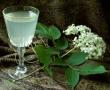
Elder is a shrubby, deciduous tree, which grows up to 10 meters high. It is found in hedge rows and open woods throughout the temperate northern hemisphere. It flowers from around May to July and fruits August to October. Both Flowers and fruit are edible, and can be consumed raw. Elder is a traditional cottage garden plant because of its many health giving properties.
Caution:
Seeds contain hydrogen cyanide. It is best to avoid chewing them, as unbroken seeds are more likely to pass through the digestive system. The leaves and bark also contain hydrogen cyanide in larger quantities and should not be consumed. Berries may be mildly toxic when unripe. At any stage, they may be laxative in quantity.
The Flower
The flowers, which form cream coloured umbels, contain rutin, an antioxidant which strengthens capillaries and is said to protect against cancer and heart disease. The flowers are also said to be blood cleansing, and can be used in the treatment of conjunctivitis. They have a peculiar aroma, but make delicious drinks, such as a fizzy "Champaign" (non alcoholic in the early stages), a cordial, wine and tea. They can also be used for making fritters. They can be dried in the sun for storage. Dried produce keeps best in vacuum sealed jars (see my article on haw to use a cheap little wine preserving pump and some sticky tape to turn pickle or jam jars into vacuum sealed containers without heat). The dried flowers do not retain the strong aroma, but are worth keeping for herbal tea. It is also worth leaving plenty of flowers to form into berries for later harvest.
At last this long awaited Handy Foraging Guide for North America is finally available. It has all the great
features of the UK version, but is adapted for North America. This version has common names in use in North America and Canada, and is also
optimised for printing on letter sized paper, the prefered format for N. America. The price is only USD 5.95.
March harvest - click on image to enlarge and drag corners
click on numbers below for detail image - arranged like clock
At the end of winter it is easy to think that there is very little in the way of edible plants to be found. If you live in a temperate climate you can, in fact,
find a lot of wild greens, some shoots, buds and roots. The above photo shows a selection of plants I found on the 24th of March in Wales, all of which are
edible or have edible parts. There are, of course, many more.
Looking at the calendar in the Handy Foraging Guide we can check what is available in March and see, for example, that Navelwort and Stinging Nettle leaves are at their best (see note at end of post on the foraging guide)
Alternatively, finding a plant, e.g. Opposite Leaved Golden Saxifrage, we can check the plant list and see that the leaves are edible (the green rectangle), and that they can be eaten raw (the "r" in brackets is short for "raw").
There are many more plants, or their parts, which can be harvested in March, so this is only a small selection.
Slips need to be held in some way which displays them well and keeps them safe. There are a number of ways they can be held,
and here I will show a card which can be used to keep a slip list. It can be loose for mobility, or it could be glued to some board as
part of an organiser. The card can be colour coded, if desired. The card I used was an off-cut I got from a printer's shop, about the
weight of a greeting card. The clear plastic is a strip cut from a report cover. You could also use a flat piece of plastic from blister packaging,
overhead projector acetate (won't allow dry-wipe pen to be wiped off) or lamination pouches (perhaps a little thin).
Here is an idea for making a simple, free contact seal for the Vacuvin pump to use on storage jars with home made valves, which does
not interfere with the use on the bottle valves.
Thanks to all those who commented, and a special thanks to those who suggested some great ideas. Prompted by the idea for a floating can base I made one which is shown in the last photo below. The can base was cut off with some old scissors (careful - very sharp edges). I then bent the edge over with some pliers to make handling safer. I pushed a nail through from the bottom to make a hole for the wick. The resulting prongs which are sticking up will prevent the wick from slipping down. The hole should not be too tight though, so that the wick can be pulled up as it burns down. There is no floating material underneath like polystyrene. I found the domed base to be enough, however, the sides could be a little higher, as the oil level comes too close to the edge, and the slightest tilt will sink the holder. Adjusting the wick length will be trial and error.
This business card sized compact calendar was inspired by Joe Lanman's at formd.net. There are a few more photos of his calendars on
Flickr where you can also read some background to the calendar. He will be doing another one for 2009, but if you prefer a
single week for each row, then you can download any of the several versions I created here. There is a Monday to Sunday version, the preferred British
arrangement, for A4 printing, either a single calendar, or four on a page to give away or as spares. Then there is a Sunday to Saturday version, the preferred North American arrangement, for letter size printing. Both are also available for printing on 3x5 index cards, if your printer can handle them. I have not tried printing the 3x5 cards, so
there is no guarantee they work. I would appreciate feedback on them from anyone who has printed the 3x5 card version. All are in .pdf format. You are free to pass them on, but please credit the source.
The one thing which has really bugged me about the easel was the table support, which was fixed to the board and not the easel. It was a quick job,
but not very strong, and above all, it always got in the way when I wanted to use the board on my lap or just move it somewhere else. Adjusting the height
was also awkward. I screwed together a simple frame with 2" x 1" battens and attached it to the uprights with bolts in one of three height settings. The
diagonal support is made of thinner strips and hinged to the frame with mirror plates at the front and bolted to the uprights, again through holes in different
positions to allow for various angles. If I would have had the equipment or patience to do it, I would have (and may still) cut grooves in those diagonals to
allow for faster and unlimited adjustment by just loosening a winged nut and moving the frame to the desired angle, then tighten again.
Living and working in a tiny space certainly has its challenges, but there are some tricks for maximising space. Some design projects
require quite a bit of table area for work in progress and project support material. As I also have several projects on the go at any one time,
I often have a work spread which has to be stored until the next time I continue work on it. For the various project spreads I made a number of hardboard trays
and a rack to hold them, which more than doubles desk surface area, whilst allowing the trays to be stored away neatly when not in use.
Click images to enlarge and drag corners to scale image.
Project trays in rack, project booklets above
One of the projects I am working on
But any one project in progress still requires more working space than my desk provided, and I also wanted a work station I could easily
move outside when the weather allows me to work in the garden. A kind of easel would be the answer. An image google search provided
me with plenty of inspiration, and a look around the shed yielded a few pieces of suitable wood.
The newest addition to my office set-up is this organising pannier, the first of a pair to be attached to the side of my desk chair as well as my garden
work chair. Although my desk was reasonably tidy with much of the supplies stored in the desk organiser and nearby drawers, shelves and hooks,
I preferred to have these supplies at my fingertips, yet out of sight, and gathered in one container which would be easy to pick up and move outdoors on a
fine day. The pannier also takes advantage of dead space on the chair.
As I planned two, one for each side of the chair, I decided to roughly divide things by
which hand usually holds the object. Pencils, pens, scissors, glue stick and Rapesco clip tool go on the right side, as well as some frequently used paper
articles like small sticky notes and flags, small sized blank paper and a few other bits and bobs. The left pannier will hold larger paper, lists, set square, ruler,
calculator and some empty pockets for waste paper and any additional item I may use occasionally.
Lerning Herbs sell a number of herb related products, including some foraging guides for the USA. They also have a free herbal course.
Tasty Gunk
Just couldn't wait to take the photo without taking a bite.
This post is a little out of season, but if you have some dried wild garlic and nettles (or any other herbs for that matter), and would like a recipe for a tasty way of consuming
spirulina powder, a rule-of-thumb basic recipe follows below. The combination may sound weird, but it tastes great in my oppinion, and some of the ingredients are quite strong in taste and disguise the odd spirulina flavour. This gunk can be made thick enough as a sandwich spread, or thinned down as a dip or salad dressing.
The new Handy Foraging Companion and Hedgerow Herbal is now available for download. If you were put off by the
printing process of the Wild Cardsguide, you will be pleased with the new version, which can
be printed on paper, and single-sided, if you prefer. For a test run or a sample of the content please check out the
guide page.
Warning - this post contains graphic descriptions of medical procedures. Not for the squeamish.
Doctor knows best. Well, not always. So this grizzly little tale took place a few decades ago, and some of these practices are thankfully
something you will only read about in medical history books (or blog posts), but people are still mutilated, irradiated and poisoned even today,
and some of it may not be necessary.
The tale I have to tell is one that happened to me back in 1968, and is one of a bazooka being used to kill a mosquito, and how a simple weed
could have saved me all the agony back then, and the worry I have carried for the best part of forty years.
If you like candles, live without electricity, or like to have some lighting back-up, you might like this simple little DIY project. An oil lamp can have a number of advantages over candles and mineral oil lamps:
If you have a plain html website which is periodically updated, you don't have to miss out on some of the great features of blog engine run proper blogs. Comments and RSS are two of the most obvious and useful features of blogs. At a glance, my site may appear to be a proper blog, but it is a very simple, hand crafted website, with a few third party widgets (check out the page source). The new comment feature is cut and past java script, which is very easy to install, and is run on the supplier's server.
At last, the long awaited Wild Cards - Handy Foraging companion and Hedgerow Herbal. This downloadable concise, illustrated 88 card pocket guide contains
a list of over 350 plants in a handy format, as well as detailed profiles on over 50 common edible plants.
Use like index cards for home reference ......(click to enlarge)
.....or bind them to use as pocket guide
Whether you forage on a leisurely weekend walk, or want to prepare for a potential survival situation, Wild Cards are your handy companions.
This unique guide packs a lot of information into a small space
list of over 350 plants with basic information on edible parts (colour coded for quick reference), how to consume, and caution notes
an illustrated directory of over 50 plants with guide to identity, culinary, medicinal and other uses
month by month chart to availability of those plants featured in the directory
caution notes including warning features to look out for
glossary of medicinal terms with brief list of relevant plants
general information on plant parts, collecting and preparation
This binding system is so new, you won't have heard of it. The Dirt Cheap Milk Container binding system is, well, dirt cheap,
is made with milk containers, and only came into existence today. As with so many of my tinkering projects, the idea was
born out of necessity.
Have you ever looked at a wild plant, and wondered if it was edible? Foraging is very popular these days, but alas, most field
guides on wild plants do not give any information on edibility, and most foraging guides are a cumbersome item to take into the
field as an additional item. They do, of course give information on how to prepare the food, along with interesting historical
snippets, and other useful data, and are still a valuable item to have on the book shelf, especially if you want to take up foraging more seriously.
To lighten your load, I have prepared a list of plants, which will only add a few extra pages to the field guide, but give you that
valuable missing information.
The new revised and expanded UK list has details of over 300 plants, which are considered by some publications
to be edible. The list includes trees, shrubs, coastal and wetland plants. Details include common name, botanical name, family, caution notes,
which part is edible and in what way it may be consumed. Following the plant list is a key, and important information
on safety, as well as some additional information, which must be used in conjunction with the list.
One of the main aids to organizing in the slip method is - you've guessed it, the slip, more specifically the action slip. The little work
docket is transient, passing through the system temporarily. It pauses along its route and is given additional information; the where,
how, when, who and what. Its behavior is ordered but flexible. It carries a unit of information and is a building block. Detailed
description of the process, and how to make or obtain a supply will be found in later chapters. Lets follow it on its journey.
If you have a water supply (spring, brook or river) below the point where you need the water, and the source is higher than the lowest part of the property,
then a hydraulic ram pump may be the solution. Hydraulic ram pumps are powered by a portion of the water running through it. If the cost of a commercial
pump puts you off, or the water volume is too little to operate the pump, you can make one to suit your conditions at very little cost. Read the rest of this entry >
Keep up to date with some great new content comming soon to this site. Subscribing to my updates is free and easy, saves time,
and you never know what nugget you may find here one day.
For North America -
various seed packs, including bulk, and urban selection for container growing. Plants grown from these seeds will produce true seeds. Avoid hybrid seeds for future proofing.
If you want to earn money on your blog with Heirloom Organics please visit ■ Blogger Resources
If you have digital or physical products, e-junkie can handle the download or provides a shopping cart. Also handles affiliates. Easy and cheap. I use it for my foraging guide.
Build your ebook launch campaign
Printer Friendly Service
Do you print or save web pages to your computer? Please check out this free, easy to use service, which can convert any web page into a printer-friendly leaner page to save on paper. You can add a bookmarklet to your favorites, and with one click insert any page you are on into their editor. Then pick the bits you want to keep and reformat, if you like. www.printwhatyoulike.com. Please tell your friends, and add a link on your website, if you have one, to help reduce waste.
Updates
Find out about the latest additions or changes on this site here.
22 December 2007
I added a new comment widget.
Brief Intro
Empowerment is probably the best word to sum up this site. Ideas, tips, tricks, DIY instructions, and encouragement for
self reliance - without costing the earth. If you read through the pages, you will find that you can do a lot more on a lot less than you may have thought
possible. No need for being rich, strong, a genius, professionally trained, etc. So do dip in, put aside any preconception, and take from this site what you like.
For a more in-depth description please check out the about section, or the site map.